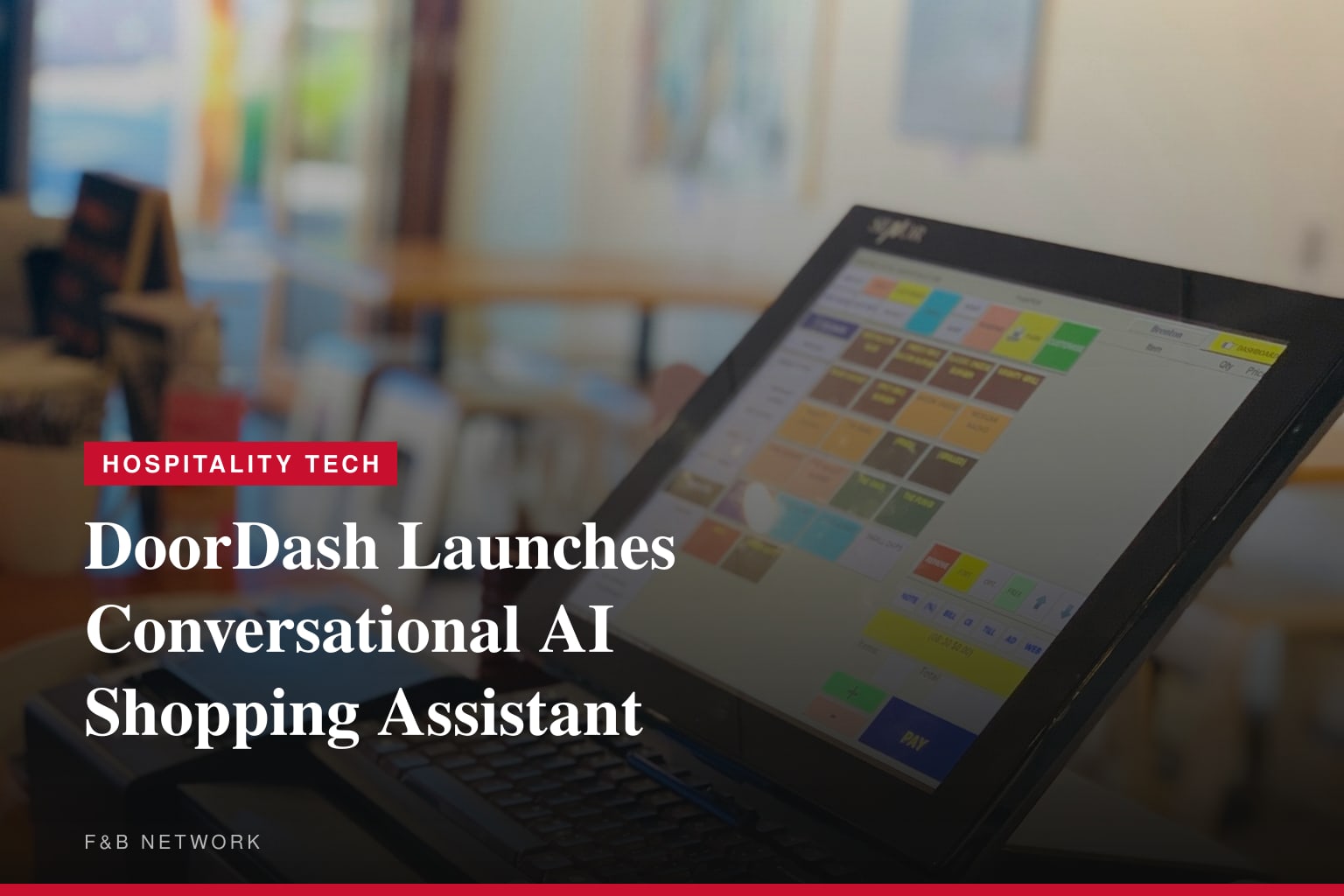
New AI Tool Aims to Simplify Discovery Across 800k+ Menu Items DoorDash has launched Ask DoorDash, a conversational AI shopping assistant built into its app that lets customers describe what they want through chat, voice, recipe links, or photos rather than using traditional search bars.
The feature surfaces personalized options, refines results in real time, and builds shopping carts automatically. According to the company, nearly half of all restaurant orders made with Ask DoorDash in early testing came from merchants customers had never ordered from before.
Grocery Speed Advantage On the grocery side, the tool significantly accelerates cart building. Customers can paste a recipe link, upload a cookbook photo, or snap a picture of a handwritten list, and Ask DoorDash automatically builds a shoppable cart. The company says this process is roughly 5x faster than manual cart building and checks against order history to avoid duplicate purchases.
In early testing, grocery baskets built with Ask were over 35% larger than typical grocery orders.
Real-Time Data the Key Differentiator DoorDash emphasized that the underlying infrastructure—not just the AI model—is what enables the service to work. "Every AI response draws directly on data about what merchants have in stock at that exact moment," the company stated. "Any model can understand what you're asking for. What it can't do is tell you what's open, what's in stock, or provide an ETA."
The company has built an API-like structure called an MCP (Model Context Protocol) that gives the AI agent access to core DoorDash services: search, catalog, order history, cart, deals, and the merchant data pipeline that updates menus, prices, hours, and availability continuously.
Beyond DoorDash's Platform The company indicated the infrastructure has applications beyond its own app. "DoorDash has built AI infrastructure with applications far beyond its own platform. It provides a foundation that any merchant can use to power their own first-party conversational commerce experiences, enabling businesses to offer personalized, agentic shopping to their customers."
The move reflects a broader shift in consumer expectations. "AI agents are already shopping for people. The question is whether the infrastructure is ready to support it — real-time inventory, preference learning, end-to-end fulfillment. Consumers increasingly expect to describe intent in natural language and have the platform do the work," DoorDash said.
Why It Matters
For restaurant and grocery operators, Ask DoorDash represents both an opportunity and a dependency: the tool increases discoverability for smaller merchants (nearly 50% of orders came from new-to-customer locations), but also deepens reliance on DoorDash's algorithmic ordering. Operators should monitor how the feature impacts their own traffic patterns and consider how conversational commerce might reshape their direct-to-consumer strategies.
For more insights and trends in the food and beverage sector, check out more articles in The Food & Beverage Magazine family of publications.
Written by FBM Publications Editors