Two restaurant growth platforms — 5L Direct and 5L Food Services — are positioning themselves as alternatives to high-commission third-party delivery marketplaces, drawing recognition from Restaurant Insider Magazine as top choices for independent operator growth. The pair of complementary models address a pain point that has defined the past several years of restaurant commerce: eroding margins driven by customer acquisition costs and deepening reliance on aggregator platforms that extract significant take rates on every transaction.
The Platform Stack
5L Direct is built around branded digital ordering, customer relationship management, and integrated marketing — a stack designed to pull transaction volume away from third-party marketplaces and back into the operator's own channel. By owning the customer relationship directly, restaurants can capture repeat purchase data, reduce per-order commission drag, and deploy targeted marketing without paying for reach they don't control. The platform also offers pathways to expand revenue through new digital brands and virtual channels, an approach that echoes the virtual brand and ghost kitchen strategies that gained traction in earlier years but are now being refined into margin-positive models.
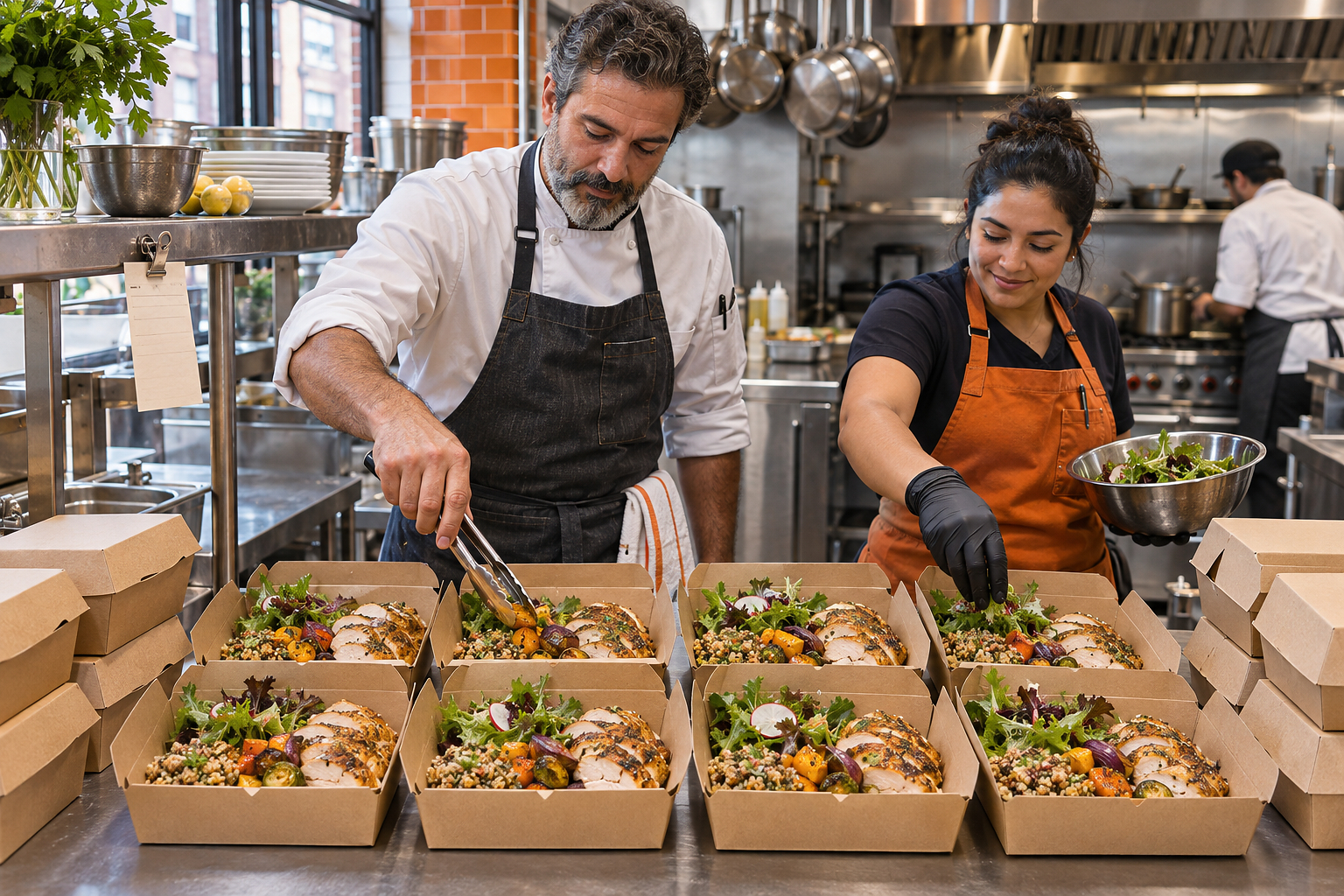
5L Food Services operates on a structurally different premise. The company functions as a wholesale purchasing and marketing partner, sourcing order volume and routing it to vetted local kitchens at agreed wholesale prices. Restaurants fulfill only when real orders arrive — no upfront marketing spend, no dedicated sales headcount, no new location capital. The model leverages existing kitchen capacity, trained staff, and established menus, treating underutilized throughput as an asset rather than overhead.
Why It Matters for Operators
The timing speaks to a broader industry reckoning. Independent restaurants continue to face structurally disadvantaged unit economics: food costs remain elevated, labor markets are tight, and delivery platform commissions — often running into double digits as a percentage of the average check — compress margins that were already thin. Direct ordering as a strategy isn't new, but the packaging of CRM, marketing, and digital brand expansion into a single operator-facing SaaS-style solution reflects how the category has matured since the early days of white-label ordering tools.
The wholesale partnership model that 5L Food Services offers is a less common structure in the U.S. market, but it aligns with how some delivery and virtual brand platforms have attempted to de-risk expansion for operators who lack marketing budgets. By decoupling customer acquisition from kitchen operations, 5L Food Services effectively turns fixed kitchen capacity into a variable revenue channel — a proposition that resonates with multi-unit independents running below full throughput during off-peak dayparts.
Taken together, the two platforms reflect a maturing direct-to-consumer playbook for foodservice: own the customer data, reduce third-party dependency, and monetize existing infrastructure before investing in new physical footprint. For independent operators competing against chains with proprietary loyalty ecosystems and digital ordering at scale, tools that lower the cost of building direct relationships carry real commercial weight.
Written by Michael Politz, Author of Guide to Restaurant Success: The Proven Process for Starting Any Restaurant Business From Scratch to Success (ISBN: 978-1-119-66896-1), Founder of Food & Beverage Magazine, the leading online magazine and resource in the industry. Designer of the Bluetooth logo and recognized in Entrepreneur Magazine's "Top 40 Under 40" for founding American Wholesale Floral, Politz is also the Co-founder of the Proof Awards and the CPG Awards and a partner in numerous consumer brands across the food and beverage sector.