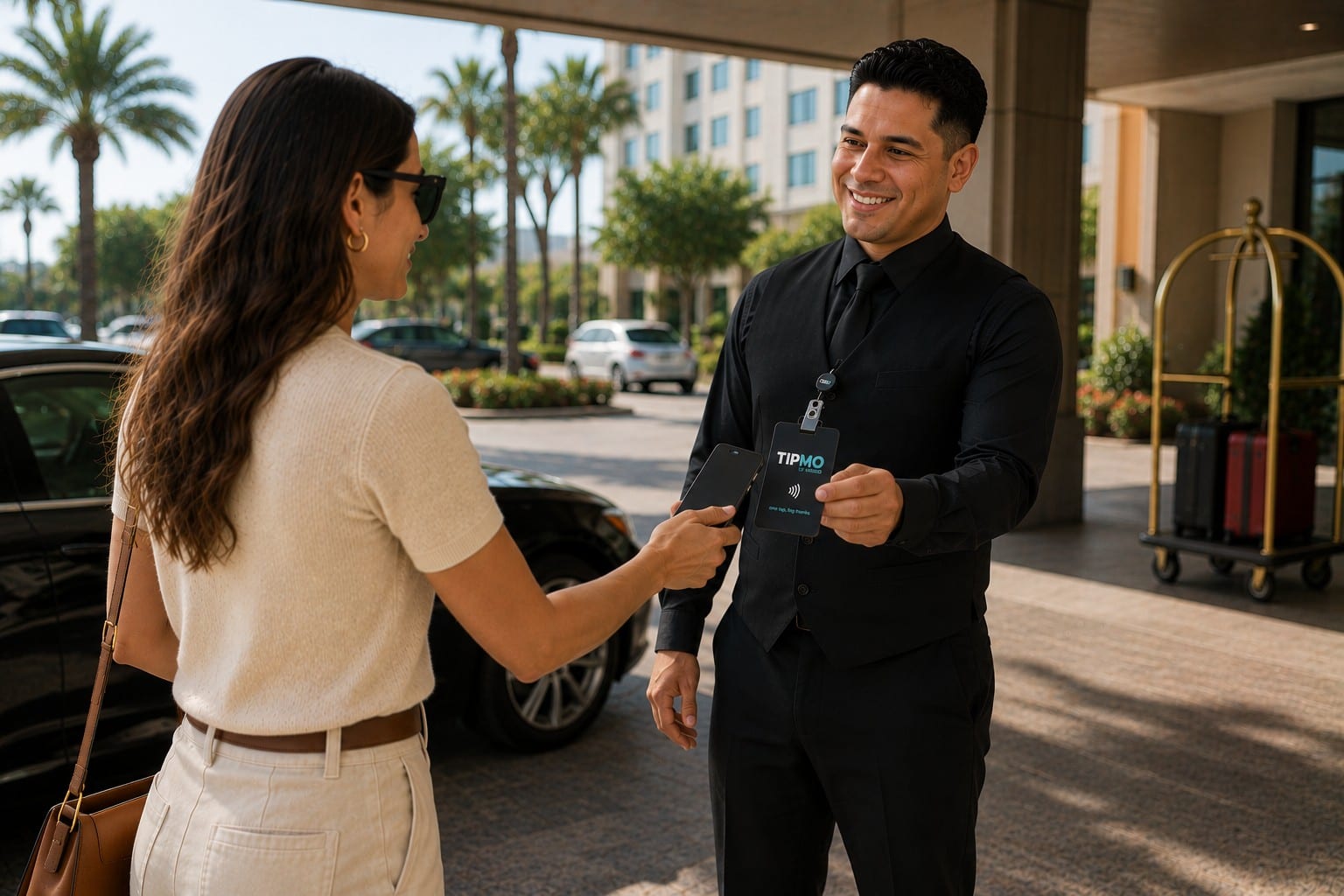
The Disappearing Handshake A guest steps out of a car, hands keys to the valet, and heads into the hotel. A decade ago, this interaction almost always included cash folded into a handshake. Today, it often ends awkwardly: the guest wants to tip but carries no cash. Both parties walk away unsatisfied. This scene repeats thousands of times daily across the hospitality industry, highlighting a quiet consequence of the cashless economy. Valets—who create a hotel's first and last impression—are among those affected most visibly.
The Tipping Gap Research reveals a significant disconnect.
According to Canary Technologies, 79% of hotel guests believe hotel workers should receive tips, yet employees estimate only about 30% of guests actually do. More telling: over 70% of non-tippers said they would have tipped if a digital option had been available. "That gap represents millions of dollars in unrealized gratuities across the hospitality industry," the analysis notes. For valets, the impact is material. Unlike housekeepers who work behind the scenes, valets have repeated face-to-face interactions with guests, historically making them among the strongest earners for gratuities alongside bell staff and food-and-beverage employees. Guests naturally associate valets with personalized service because they see the individual helping them.
Recognition Beyond Money But visibility no longer guarantees a tip when guests carry only credit cards and mobile payment apps. The problem extends beyond lost income. "Tips are about far more than income. They are immediate recognition," according to the analysis. When employees know exceptional service can still be rewarded in a cashless environment, motivation increases. Staff feel seen, appreciated, and recognized that their effort matters. Those feelings directly influence morale, job satisfaction, and retention—a critical concern as labor remains one of hospitality's greatest operational challenges.
Technology Matters Not all digital tipping solutions function equally.
Early adopters used QR codes because they were inexpensive, but they introduce friction: guests must locate the code, open their camera, scan, wait for a browser to load, navigate to a payment page, and complete the transaction. Near Field Communication (NFC) technology changes that. Guests simply tap their phone against an NFC-enabled badge or credential—similar to retail tap-to-pay—making the interaction faster, more intuitive, and significantly more secure. Advanced NFC uses encrypted authentication that is harder to duplicate than static QR codes. For mobile employees like valets, bell staff, shuttle drivers, and pool attendants, portability matters. A QR code attaches to a sign; an NFC credential travels with the employee. "Hospitality is fundamentally about people, not locations," the analysis states.
Why It Matters
Digital tipping is not merely a payment technology—it is an employee engagement strategy.
For multi-property management companies, portfolio-wide implementation creates a standardized employee benefit that strengthens recruiting across every hotel. Instead of offering "competitive wages," operators can confidently tell prospective employees: "We have invested in technology that helps you earn more."
For more insights and trends in the food and beverage sector, check out more articles in The Food & Beverage Magazine family of publications.
Written by FBM Publications Editors