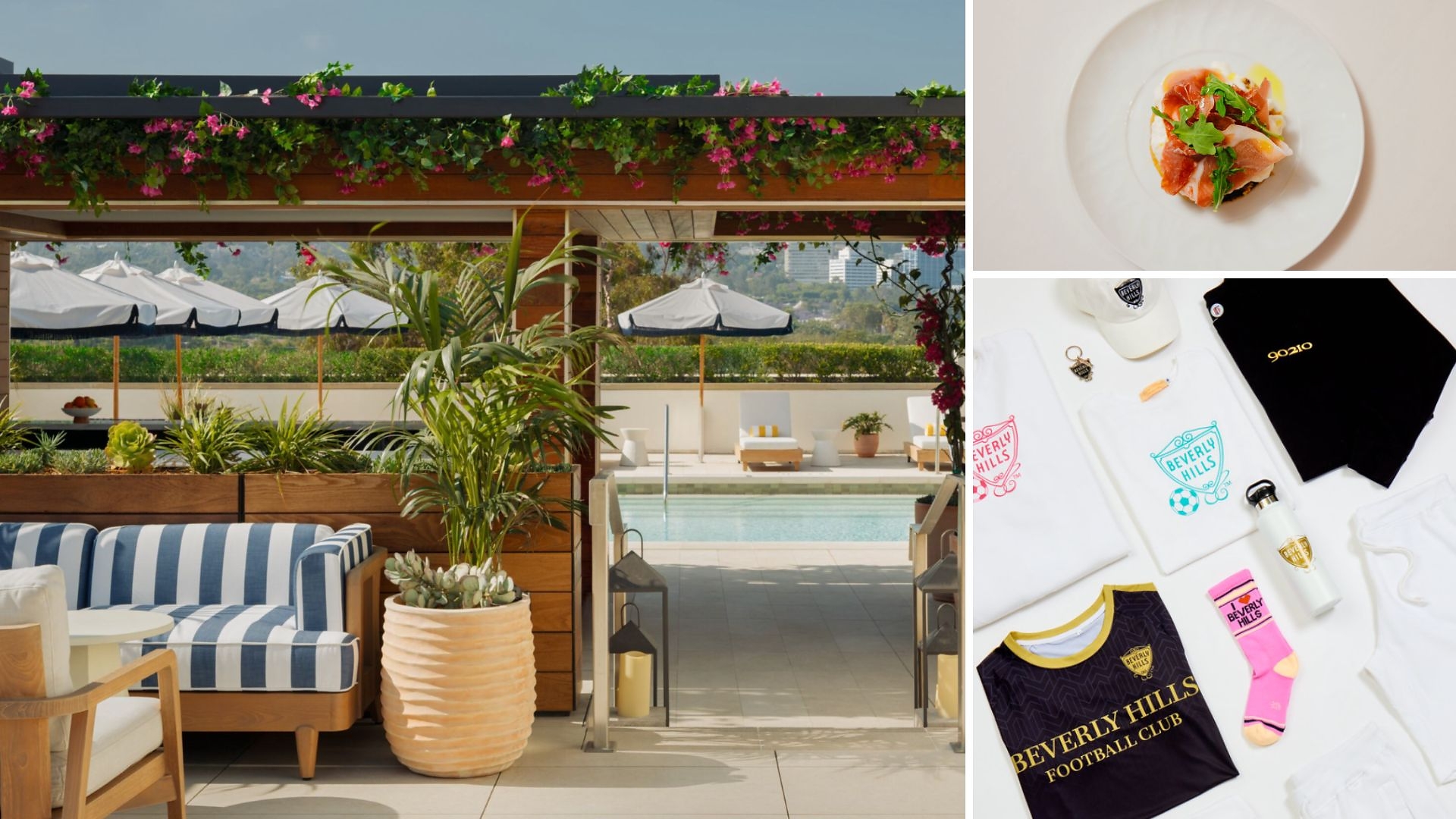
The Beverly Hills Conference & Visitors Bureau (BHCVB) is rolling out a coordinated destination marketing and hospitality activation tied to the 2026 FIFA World Cup, leveraging the event's proximity to Los Angeles to drive incremental cover counts, average check lift, and lodging demand across its luxury hotel and restaurant portfolio. With LA serving as a primary host city for what is routinely the world's most-watched sporting event, the BHCVB is deploying a multi-channel strategy designed to capture high-value international travelers during match windows and shoulder periods alike.
The activation spans three distinct operator-facing pillars. First, participating hotels and restaurants are rolling out globally inspired F&B menus — small-format dishes and specialty cocktails engineered for throughput during pre- and post-match dayparts. Second, a limited-edition merchandise collection gives properties a branded retail revenue layer, a tactic increasingly used by destination marketers to extend guest engagement beyond the room night and the cover. Third, a soccer-themed episode slate of the BHCVB's existing 'Cuisine & Couture' social content series is being produced to amplify the programming to international audiences across digital channels, effectively functioning as organic top-of-funnel for the destination's hotel and F&B operators.
For hospitality operators, World Cup cycles have historically represented a measurable demand compression opportunity in host-adjacent markets. Properties with dynamic revenue management systems and channel manager integrations stand to capture rate premiums from OTA-driven international booking surges, particularly from traveling supporter groups whose itineraries extend well beyond match days. The BHCVB's coordinated approach — aligning F&B, retail, and content into a single campaign — mirrors destination marketing strategies that have proven effective at converting event-adjacent visitors into multi-night, high-spend guests, a profile that meaningfully moves average daily rate and RevPAR metrics for luxury-tier properties. The broader luxury urban hotel segment has leaned increasingly on destination marketing integrations and PMS-linked demand tools to ensure rate strategy keeps pace with event-driven booking velocity.
The content series component also reflects a growing operator awareness that social media programming tied to live sporting events can function as a low-cost distribution channel — one that supplements paid OTA exposure without increasing take rate exposure. As F&B operators refine event-driven menu and digital ordering strategies, activations like this one illustrate how destination bureaus are increasingly acting as de facto marketing technology coordinators for their constituent properties, aggregating demand signals and distributing campaign assets at scale. The Food & Beverage Magazine network has tracked similar CVB-led activations driving measurable ancillary revenue lift during major sporting events.
With the 2026 World Cup spanning multiple weeks and dozens of participating nations, Beverly Hills operators have an extended runway to iterate on menu programming, merchandise sell-through, and content performance data — giving revenue and F&B teams real-time feedback loops that can inform both in-tournament adjustments and longer-term event hospitality playbooks.
Written by Michael Politz, Author of Guide to Restaurant Success: The Proven Process for Starting Any Restaurant Business From Scratch to Success (ISBN: 978-1-119-66896-1), Founder of Food & Beverage Magazine, the leading online magazine and resource in the industry. Designer of the Bluetooth logo and recognized in Entrepreneur Magazine's "Top 40 Under 40" for founding American Wholesale Floral, Politz is also the Co-founder of the Proof Awards and the CPG Awards and a partner in numerous consumer brands across the food and beverage sector.